Showing posts with label People. Show all posts
Showing posts with label People. Show all posts
Monday, December 5, 2011

Sunday, November 20, 2011
Thinking Fast and Slow
In the highly anticipated Thinking, Fast and Slow, Kahneman takes us on a groundbreaking tour of the mind and explains the two systems that drive the way we think. System 1 is fast, intuitive, and emotional; System 2 is slower, more deliberative, and more logical. Kahneman exposes the extraordinary capabilities—and also the faults and biases—of fast thinking, and reveals the pervasive influence of intuitive impressions on our thoughts and behavior. The impact of loss aversion and overconfidence on corporate strategies, the difficulties of predicting what will make us happy in the future, the challenges of properly framing risks at work and at home, the profound effect of cognitive biases on everything from playing the stock market to planning the next vacation—each of these can be understood only by knowing how the two systems work together to shape our judgments and decisions.
Saturday, November 19, 2011
Meet the Economist- Columbia Professor Naidu
It was in Seattle that he first decided to go into economics. "You realized, 'There're not very many economists coming out of our political movement,' and so I thought I could be one of those," he explained.
He studied at the University of Massachusetts at Amherst and then at Berkeley before arriving at Columbia, focusing on political economy, economics history and labor economics. His first research paper, which he wrote with Michael Reich and Arin Dube, showed that an increase in the minimum wage did not, as many economists assumed, necessarily lead to an rise in unemployment.
He grew up in Newfoundland, where, he says, dinner occasionally meant moose curry. His parents came from, in his words, "small villages in the middle of nowhere, India." He said his visits to those places made a lasting impression on him.
"You're a 6-year-old and you see your counterpart, who's another 6-year-old, having blond hair from malnutrition," he said. "That will stay with you."
A few days ago, Naidu reflected on his experiences in the anti-globalization movement that emerged from Seattle in 1999. "It was exciting and exhilarating -- and it felt like we were winning," he said. "I think for like two years we were winning -- and I think we did win. Now, as a professional economist, I look back on that and think, ‘Wow, that was a great thing we did -- changing the terms of the debate on free trade and exposing the politics that were underlying what was supposed to be win-win for everybody and in fact might not have been."
"Even now that I'm teaching economics," he continued, "so many of the people that I hang out with, that I associate with, are people that I hung out with in that period."
"And that is what I think will happen with the Occupieds," he said. "Even if the movement goes away, the social networks that have formed will hang around. People will be friends, even if they're no longer camping together in the camps, and when strangers meet in whatever venues, they'll be like, ‘You were there,’ and there will be an immediate rapport. In the long run that will have a big political impact."
Thursday, November 10, 2011
Movies about the Financial Crisis
There are three ways to make a living in this business. Be first, be smarter, or cheat.
Sunday, September 18, 2011
Tuesday, September 6, 2011
Something for Nothing

Something for Nothing-A Novel
Michael W. Klein
David Fox (Ph.D. Economics, Columbia, Visiting Assistant Professor at Kester College, Knittersville, New York) is having a stressful year. He has a temporary position at a small college in a small town miles from everything except Albany. His students have never read Freakonomics. He thinks he is getting the hang of teaching, but a smart and beautiful young woman in his Economics of Social Issues class is distractingly flirtatious. His research is stagnant, to put it kindly. His search for a tenure-track job looms dauntingly. (The previous visiting assistant professor of economics is now working in a bookstore.) So when a right-wing think tank called the Center to Research Opportunities for a Spiritual Society (CROSS)--affiliated with the Salvation Academy for Value Economics (SAVE)--wants to publish (and publicize) a paper he wrote as a graduate student showing the benefits of high school abstinence programs, fetchingly retitled "Something for Nothing," he ignores his misgivings and accepts happily. After all, publication is “the coin of the realm,” as a senior colleague puts it.
But David faces a personal dilemma when his prized results are cast into doubt. The school year is filled with other challenges as well, including faculty politics, a romance with a Knittersville native, running the annual interview gauntlet, and delivering the culminating "job talk" lecture under trying circumstances. David’s adventures offer an instructive fictional guide for the young economist and an entertaining and comic tale for everyone interested in questions of balancing career and life, success and integrity, and loyalty and desire.
Monday, August 29, 2011
Vijay Kelkar- A Practitioner in Indian Economic Policy
Vijay Kelkar's is a fascinating story in Indian public policy. He started out as an economics Ph.D. and turned himself into a consummate policymaker. While he did many interesting things in the field of oil and gas, and as executive director of the IMF, I worked with him in his fiscal phase...
...I used to get astonished at the way Kelkar, who is 20 years older than me, consistently found the energy and morale to go back into the fray again and again, chipping away at solving long-standing problems. This also taught me that while weary cynicism is a more fashionable pose, progress is only achieved through the dint of boundless optimism.
Practical people are often dismissive of the world of ideas, but that is not the Kelkar that I have known. For one thing, he made a point of reading the current global research in economics on an astonishing scale. I have been frequently humbled in finding that his knowledge of the current literature was better than mine. I suspect his years at the IMF were very useful in tooling him up in modern open economy macroeconomics, which is often a gap in the knowledge of those who experienced a closed India in their formative years. Kelkar has always encouraged me, saying that in an open society, ideas matter, so it was important to build good ideas, and to push important messages out in the public domain, even when this makes many people uncomfortable.

via Ajay Shah
Monday, August 8, 2011
Summary of Chapter One, Adapt
Chapter One: Thomas Thwaites, Eric Beinhocker, Philip Tetlock, John Kay, Paul Ormerod, Donald Green, Michele Belot, Richard Thaler, David Halpern, Matthew Taylor and Jonah Lehrer.
Summary of Chapter Two, Adapt
Chapter Two: H.R. McMaster, Andrew Mackay, John Nagl, George Feese, Dennis DuTray, Jacob Shapiro, Steve Fidler, Toby Dodge, and Adrian Harford.
Friday, March 25, 2011
Seven Wisdoms on the Sri Lankan Economy

Koshy Mathai, the highly-respected and much-sought-after IMF Resident Rep in Sri Lanka left the audience with seven points of his wisdom to ponder if Sri Lanka is to sustain its current euphoric growth experience...-Want to uplift the economy? Follow the 7 wisdoms of Koshy Mathai
The IMF and its staff have a remarkable skill in using a specially articulated polite language when it comes to addressing a host country’s general public. This is understandable because the IMF is a guest in a host country and should not overtly or covertly rouse popular sentiments or add to the fears of people by speaking the wrong language and be an embarrassment to its host...
Risk factors need urgent attention
Koshy did not say it explicitly, but he implied that the achievements so far are not adequate for sustaining the growth momentum in the medium to long run. He coated it nicely saying that there are “risk factors” facing the economy and they need be addressed urgently and permanently.
In my view, his implication was that the longer Sri Lanka would delay action, the worse would be the results it will have to reap. It is like a cancer patient refusing stubbornly to take medication in time and one fine day finding the cancer invading his vital systems.
To overcome these risk factors and place the economy in a sustainable growth path, he suggested a course of action that embodied the seven points of his wisdom...
One should not forget that the IMF benchmarks are too liberal and were revised upward when it found that it was the only way to save the stand-by arrangement.
Its budget deficit at seven per cent and debt level at 80 per cent, both of GDP, are unsustainable. Therefore, in the long run, there is no alternative but to discipline the budget, as now identified by Koshy too...
In this context, according to Koshy, the Government’s recognition of the need for developing five hubs in Sri Lanka is an important step taken toward the modernisation of the country’s economy.
While all hubs will help Sri Lanka to expand its services sector and sell services to the rest of the world, the knowledge hub will develop Sri Lanka’s human capital base. The early signing of CEPA with India will help Sri Lanka to develop its knowledge base by establishing higher academic institutions in the style of reputed Indian institutes of Technology with Indian partnership.
Saturday, December 18, 2010
Saturday, December 4, 2010

Tuesday, November 30, 2010

Tuesday, September 21, 2010
Quote on Unemployment

Related Podcast;
de Botton on the Pleasures and Sorrows of Work
At one point in book lovely parallel between an Edward Hopper painting and a woman at work writing a marketing study. Hopper really tried to force the eye to notice a lot of that--the industrial life, the unseen, quiet moments of daily existence, not cathedrals or great landmarks. Lots of pictures of paintings of corners of things. Help us see some of the things we are looking at. Hopper classic example. Can't be an American today in many situations without that word "Hopperesque" coming to mind. Be it the late-night motel, the bar, the diner, whatever, we'll be in the footsteps of this great painter. Art is putting post-it notes on parts of the world going, Notice this. Your book is a tourist guide to some of the aspects of modern work.
Tuesday, August 31, 2010
Two Book Recommendations
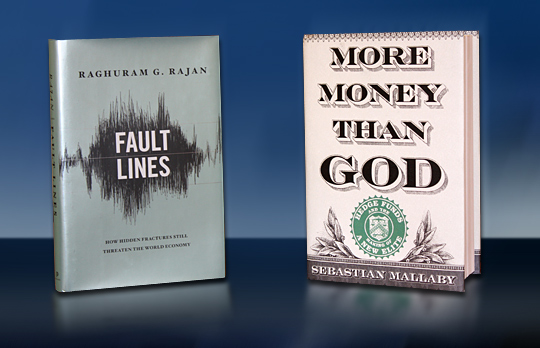
Related:
Predicting the Financial Crisis: A Q&A With Fault Lines Author Raghuram Rajan
Friday, August 27, 2010
Tuesday, March 23, 2010
Assorted Podcasts
What's wrong with macro-economics-Paul Omerod
New economics- Arnold Kling
State Building in Afghanistan: and Lessons from Seventeenth Century France
The Invention of the Jewish People
Why was Christmas banned for almost 20 years in England
A.C. Grayling - A Very Public Philosopher
The liar's paradox and other philosophical absurdities
The man who taught Darwin beetles
The parable of the wise ones
Religion and Pluralism in a Divided World
Speaker: Anwar Ibrahim
Studying Islam across times and place: how to compare?
Speaker: Professor John Bowen
Beyond Copenhagen- Lord Stern
Public hospitals - reform overseas
Thailand's democracy
The tale of two cities
Over the past ten years Australian cities and towns have faced water shortages and water restrictions, yet Singapore, which once imported 80 per cent of its water, has become self sufficient. Are there any lessons Australian cities can learn from Singapore?
Babies at risk?
Figures show that the number of babies taken from mothers at birth is rising dramatically, particularly in NSW. Judgments must err on the side of child safety, but there's concerns some babies are taken needlessly. One couple is suing for $18 million.
Mahatma Gandhi: from lawyer to national liberator
The crime gene
Convicted murderer Abdulmalek Bayout recently made legal history when a court in Italy reduced his sentence because it accepted that Bayout was genetically predisposed to being aggressive and violent! Controversial...well it gets worse...the so-called crime gene is more prevalent in some racial groups than others!
New economics- Arnold Kling
State Building in Afghanistan: and Lessons from Seventeenth Century France
The Invention of the Jewish People
Professor Shlomo Sand has triggered a debate with his new book which argues that one of the founding myths of Israel - the exile and return of the Jews from their ancestral land - is a myth.
Why was Christmas banned for almost 20 years in England
A.C. Grayling - A Very Public Philosopher
A.C. Grayling, one of Britain's foremost philosophers and public intellectuals. An extraordinarily wide-ranging writer, Grayling has written plays, he's written works of technical philosophy and he's written about great philosophers: including books on Berkeley, Russell and Wittgenstein and a biography of René Descartes More recently, he's turned his attention to historical topics, with a book on the Allied bombing of civilians in WWII, and that's one of the issues that we discuss with him today: what is the role of the philosopher in assessing the moral validity of the Allies' prosecution of the war against barbarism?
The liar's paradox and other philosophical absurdities
The man who taught Darwin beetles
The parable of the wise ones
Religion and Pluralism in a Divided World
Speaker: Anwar Ibrahim
Studying Islam across times and place: how to compare?
Speaker: Professor John Bowen
Beyond Copenhagen- Lord Stern
Public hospitals - reform overseas
Thailand's democracy
The tale of two cities
Over the past ten years Australian cities and towns have faced water shortages and water restrictions, yet Singapore, which once imported 80 per cent of its water, has become self sufficient. Are there any lessons Australian cities can learn from Singapore?
Babies at risk?
Figures show that the number of babies taken from mothers at birth is rising dramatically, particularly in NSW. Judgments must err on the side of child safety, but there's concerns some babies are taken needlessly. One couple is suing for $18 million.
Mahatma Gandhi: from lawyer to national liberator
The crime gene
Convicted murderer Abdulmalek Bayout recently made legal history when a court in Italy reduced his sentence because it accepted that Bayout was genetically predisposed to being aggressive and violent! Controversial...well it gets worse...the so-called crime gene is more prevalent in some racial groups than others!
Tuesday, February 23, 2010
Another Profile of Krugman- From Asimov to Keynes
Last August, Krugman decided that before he and Wells departed for a bicycle tour of Scotland he would take a couple of days to speak at the sixty-seventh world science-fiction convention, to be held in Montreal. (Krugman has been a science-fiction fan since he was a boy.) At the convention, there was a lot of extremely long hair, a lot of blue hair, and a lot of capes. There was a woman dressed as a cat, there was a woman with a green brain attached to her head with wire, there was a person in a green face mask, there was a young woman spinning wool. There was a Jedi and a Storm Trooper. Those participants who were not dressed as cats were wearing T-shirts with something written on them: “I don’t understand—and I’m a rocket scientist,” “I see dead pixels,” “Math is delicious.” Krugman has always had a nerdy obsession with puns. (He is very proud of a line in one of his textbooks: “Efforts to negotiate a resolution to Europe’s banana split had proved fruitless.”) He also likes costumes. Once, he and Wells gave a Halloween party where the theme was economics topics—two guests came as Asian tigers, several came as hedge funds, one woman came as capital, dressed as a column. Sitting up onstage at the science-fiction convention, Krugman looked happy to be there. It seemed that these were, in some worrying sense, his people.
“Hi, everyone!” he called out.
“Hi!” everyone called back.
Krugman explained that he’d become an economist because of science fiction. When he was a boy, he’d read Isaac Asimov’s “Foundation” trilogy and become obsessed with the central character, Hari Seldon. Seldon was a “psychohistorian”—a scientist with such a precise understanding of the mechanics of society that he could predict the course of events thousands of years into the future and save mankind from centuries of barbarism. He couldn’t predict individual behavior—that was too hard—but it didn’t matter, because history was determined not by individuals but by laws and hidden forces. “If you read other genres of fiction, you can learn about the way people are and the way society is,” Krugman said to the audience, “but you don’t get very much thinking about why are things the way they are, or what might make them different. What would happen if ?”
Monday, January 4, 2010
Which bloggers are attending AEA
Assorted on AEA meetings- will keep updating;
Healthcare Economist;
Of interest to above: The Current Economic Crisis and Lessons for Economic Theory Eastern Economic Journal, forthcoming
Tweedledumb and Tweedledangerous
Can you guess how many Austrian economists made the AEA calendar?
Environmental Economist;
Arnold Kling;
Harvard’s Feldstein: Economy Might Run Out of Steam in ‘10
Krugman on the State of the Economy
Report from AEA meeting, Part I
A Daddy’s Dream: The AEA Economists Calendar
No to Bernanke
AEA Humor Session
AEA 2010 Papers Tag Cloud: Look Ma, We’re Relevant!
Healthcare Economist;
Joseph Stiglitz will give the keynote address on “Homoeconomicus: The Impact of the Economic Crisis on Economic Theory.”
Of interest to above: The Current Economic Crisis and Lessons for Economic Theory Eastern Economic Journal, forthcoming
Tweedledumb and Tweedledangerous
Can you guess how many Austrian economists made the AEA calendar?
Environmental Economist;
As scientists struggle to predict exactly how global climate change will affect our environment, economists are grappling with another question: How well can humans adapt?
Arnold Kling;
I agree with his view that the housing bubble was caused much more by regulatory failure than monetary policy failure
Harvard’s Feldstein: Economy Might Run Out of Steam in ‘10
Krugman on the State of the Economy
Report from AEA meeting, Part I
A Daddy’s Dream: The AEA Economists Calendar
No to Bernanke
AEA Humor Session
AEA 2010 Papers Tag Cloud: Look Ma, We’re Relevant!
Subscribe to:
Posts (Atom)


.png)