There is a broad agreement that several key factors determine competitiveness in IT/BPO:(i)availability of employable skills(including IT skills), (ii) competitive costs,(iii)quality of infrastructure relevant to the IT/BPO industry,and(iv)and overall environment that is conducive to business. Of all these factors, countries can substantially increase their international competetive advantage if they execute smart strategies to increase their skills offering for the industry.
Given these developments, the lack of skills is now the most important binding constraint to the growth of the IT/BPO sector in Kenya. The country currently produces around 30,000 university graduates and about 250,000 graduates from high school annually. However, very few of these graduates, whether at school or university level, are immediately suitable for employment in the IT/BPO industry. According to the recent McKinsey Report (2008), the talent pool for the BPO sector in Kenya currently is very limited. Only about 5,000 graduates are suitable for employment in the industry. The report has projected the skills required for BPO sector to be 70 percent for voice and data operators, 5 percent for managers, 10 percent for engineers and 15 percent for technicians


Argentina's experience vividly illustrates the economic damage stemming from default and departure from a hard-peg currency regime. In hindsight, the IMF has recognized that it was too optimistic about Argentina's prospects. The lesson is that postponing an unavoidable debt restructuring increases the ultimate costs, and that orderly restructuring is far preferable to the chaos of unilateral default under extreme duress (see IMF 2003).
While the Greek and Argentine episodes have in common some fiscal and monetary features, they differ importantly in their exchange rate regimes. Argentina's currency board exposed the country to balance sheet mismatches and made it vulnerable to speculative attack. More importantly, both its decision to establish a currency board in the first place and later to abandon it were unilateral. Greece's use of the euro protects it from speculative attack. Moreover, its currency regime is a result of a multilateral agreement involving continental Europe's dominant economic powers. As a member of the euro area, Greece is part of an important and influential "family." It gains a measure of protection by being under the monetary authority of the European Central Bank, one of whose primary objectives is the maintenance of stability in the euro area. As recent developments show, disorder in one country can undermine the financial stability of the whole euro area, giving member countries strong incentive to back each other up. As part of the European Monetary Union, Greece gains powerful supporters that it would lose if it were to go it alone. The magnitude of Greece's debt problem is very great and is not likely to normalize quickly. So these relationships may be tested in a few years when Greece's financial assistance package is depleted.


The incentives for governments to stay current on what they owe are hard to measure, but financial market indicators provide a way to gauge investors’ perceptions of the willingness to repay debt. International investors became reluctant to lend to the troubled European governments, especially Greece, as indicated by interest rates on government borrowing. In particular, interest rate spreads for these countries’ debt relative to safer German issuance rose dramatically. Chart 3 shows 10-year bond spreads—the difference between the interest rate on each country’s 10-year bond minus the rate on Germany’s relatively safe 10-year obligations. Movements in these spreads in recent months show that international investors required a much higher rate of return to buy each country’s debt.
Suppose investors can buy a German bond at an annual interest rate of 4 percent with practically no risk, or a Greek bond that has a 3 percent chance of default. Investors will go with the German bond unless the Greek government offers an interest rate around 7 percent—a spread of about 3 percent—to cover the probability of default. Such a relationship can’t be expected to hold exactly in the data, but interest rate spreads can still be used to learn about the likelihood of default.[2] Chart 3 shows that in May 2010, investors’ perceived risk of default increased drastically for Greece and rose by a lesser degree for the other four countries
Characteristics of the U.S. Labor Market compared with Germany
Comparing the German and U.S. labor markets will shed some light on the large differences in job creation, despite similar technology and external conditions. In the United States enterprises and workers respond directly to market incentives:
-the government and union presence in the labor market is more limited
-wage determination is less centralized and developments are guided by market forces; there is little emphasis on incomes policies
-social welfare benefits are not as generous, they are available for relatively short periods, and they are designed to give incentives for recipients to search for new and better job opportunities
-and the wedge between gross wages and take-home-pay, caused by income taxes and social security contributions, is much smaller.
In the tradeoff between allocative efficiency and distributional equality, the United States has emphasized allocative efficiency, while Germany has placed more stress on equity as a cornerstone of the Soziale Marktwirtschaft model. But the U.S. system provides both firms and individuals equal access to the market place and the economic opportunities that are available. The U.S. system stresses the incentives for individual initiative and responsibility for one's economic well-being--that is, rewards to innovation, risk taking, and investment in oneself (i.e., human capital). The social safety net attempts to limit the downside risks associated with this system but not to eliminate inequality of outcomes. From a European perspective, it is interesting that the vast majority of Americans do not question their economic system.
Arrivals
A. Border statistics
Table 1. Arrivals of non-resident tourists at national borders
Table 2. Arrivals of non-resident visitors at national borders
B. Statistics on accommodation establishments
Table 3. Arrivals of non-resident tourists in hotels and similar establishments
Table 4. Arrivals of non-resident tourists in all types of accommodation establishments
Overnight stays
Table 5. Overnight stays of nonresident tourists in hotels and similar establishments
Table 6. Overnight stays of nonresident tourists in all types of accommodation establishments.


Let me mention just two powerful features of India’s success story that hold important lessons for other countries.
First, a focus on inclusive growth. In India, the goal is not simply for growth to be rapid, but for growth to also be inclusive—and improve the quality of life for all citizens. As India’s government seeks the best policies to achieve this dual goal, it is fortunate in having advisers like Professor Basu, who brings such strong academic credentials to his position as Chief Economic Adviser.
Second, technological advances. India’s meteoric rise in the services sector has been an inspiration to other countries. Clearly, India’s commitment to excellence in higher education has played a major role in this success. So too did the dismantling of the “license raj” in the early 1990s, which unleashed a powerful wave of creativity and entrepreneurial spirit.
These two features of the Indian growth miracle are coming together through the Unique Identification project, under the leadership of Chairman Nilekani. This project holds out great hope for making India’s social services—which provide a lifeline to hundreds of millions of vulnerable Indians—better able to reach those in need, and more cost-effective. The UID can also advance financial inclusion, which plays a critical role in supporting small businesses and in reducing poverty.
Self-discovery refers to the process of identifying industries with potential but as of yet unrealized comparative advantage. Private entrepreneurs may be reluctant to accept the risks involved in developing new products or industries if they fear that others will quickly imitate their activity and eliminate the profits necessary to offset the initial investments and risks. Historical export data from the country in question, as well as in other countries at similar income levels, can be used to infer likely opportunities for export diversification and growth (Klinger and Lederman 2006, Hausmann et al. 2005, Hausmann and Klinger 2006, and Klinger and Lederman 2006). This literature uses the concept of revealed comparative advantage (RCA) over time, e.g. changes in export composition between different periods, to assess the dynamism of a country’s exports. Exports of particular commodities can also be assessed in terms of their growth potential, by examining the income levels of other countries that export this and similar products. That is, products typically exported by high-income countries are assumed to be more beneficial for generating growth than products typically exported by low-income countries.-Togo - Reviving the traditional sectors and preparing for the future : an export-led growth strategy - country economic memorandum
The turnover in exports suggests that self-discovery is not a binding constraint to growth in Togo. About 20 percent of Togo’s exports comprising 31 product groups at the 3-digit SITC level have emerged only since 2000, suggesting that some innovation is taking place. Exports of this group have increased 14.5 percent between 1992-96 and 2002-06. The “implied income” associated with this export basket, when looking at other countries exporting the same products, was 30 percent above that of the traditional exports of Togo.
She puts it this way: leadership is about "providing solutions to common problems or offering ideas about how to accomplish collective purposes, or mobilizing the energies of others to follow these courses of action." I'd describe this as creating the focal point for an organization in a multiple equilibrium game. Others might reach for the word "vision", although so many visions have proven mirages that one is suspicious of the word.
I once had a dream that I would come to Washington, DC and share my great ideas with the wise men and women in Congress. "Eureka!" they would reply. "Here is a Good Idea!" Time has solved that idealistic illusion. Congress knows the math. They can appreciate the many ways that 1 + 1 =/= 14,750,200,000,000 (the current U.S. GDP). If it were just a math problem, legislators would have solved it years ago. No, the addiction to a budget deficits is a Rules Problem. To solve it, the nation has to change the rules.
Peter was an inspiration and role model for me during my student years at MIT. My encounters with him -- in the classroom and in his office -- left an indelible impression. I recall going over to the Dewey Library shortly after arriving in Cambridge, in the summer of 1972, and digging out Peter's doctoral dissertation. This was a mistake! Peter's reputation as a powerful theorist had been noted by my undergraduate teachers at Northwestern. I wanted to see how this reputed superstar had gotten his start. Just how good could it be, I wondered? I had no idea! What I discovered was an elegant, profound and exquisitely argued axiomatic treatment of the general problem of representing consumption preferences over an infinite time horizon, extending results obtained by his undergraduate teacher and the future Nobel Laureate, Tjallings Koopmans.
I prided myself on being a budding mathematician in those years. Yet, Peter's effortless mastery in that dissertation of the relevant techniques from topology and functional analysis, and his successful application of those methods to a problem of fundamental importance in economic theory -- all accomplished by age 23, younger than I was at the moment I held his thesis binder in my hands! – was simply stunning. This set what seem to me then, and still seems so now, to be an unapproachable standard. I was depressed for weeks thereafter!
Even more depressing was what I discovered as I got to know Peter better over the course of my first two years in the program: that mathematical technique was not even his strongest suit! An unerring sense of what constitute the foundational theoretical questions in economic science, and a rare creative gift of being able to imagine just the right formal framework in the context of which such questions can be posed and answered with generality -- this, I came to understand, is what Peter Diamond was really good at.
And so, I learned from him in those years what turned out to be the most important lesson of my graduate educational experience -- that, in the doing of economic theory and relative to the behavioral significance of the issue under investigation, technique is always a matter of secondary importance -- neither necessary nor sufficient for the production of lasting insights.


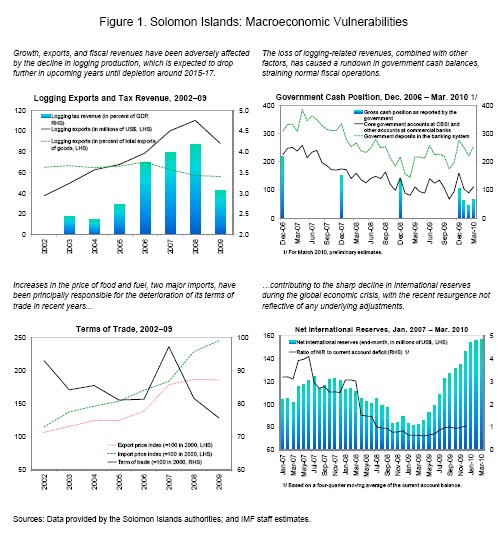
The authorities’ acknowledge that further progress on the agenda of structural reform is needed to strengthen medium-term growth prospects. They intend to build on the steps taken to commercialize operations in stateowned enterprises; improve competitiveness, including the deregulation of telecommunications; and reduce the cost of doing business through revision of the legal framework.
In view of the adverse impact of the global economic downturn, the key objective of the authorities’ economic reform program is to establish a basis for resuming solid growth and reducing external vulnerability in a low-inflation environment, while advancing poverty alleviation efforts. To this end, the program seeks to strengthen the fiscal position, enhance monetary policy operations, and safeguard the domestic financial sector. By laying a strong macroeconomic foundation, the program is also expected to help catalyze additional donor support for the country.
Fiscal discipline will continue to serve as the main anchor for macroeconomic stability. Efforts will focus on rebuilding cash reserves mainly by strengthening revenue collection and prioritizing expenditure. Adopting a fiscal responsibility law and devising a proper resource tax regime would help enhance budget discipline, improve revenue transparency, and ensure a sustainable fiscal path.
“The current monetary stance is broadly appropriate, and sufficiently accommodative to support economic recovery. The program seeks to strengthen the operational framework of monetary policy and introduce new policy instruments to help banks manage liquidity, ensuring long-term price stability.
The report warns that examples of rapid and sustained economic growth globally are rare. The Pacific Island Countries face particular disadvantages, due to their small size and large distance to major markets. Solomon Islands may face especially severe constraints, as its scattered population reduces access to infrastructure and increases the costs of transport.
"Solomon Islands faces economic challenges, but growth prospects are reasonable if Solomon Islands plays to its existing advantages and capabilities," said Doug Porter, who led the study.
The report states that prospects for economic development in Solomon Islands will be significantly improved if four key potential sources of growth are prioritized. These areas include:
-Increasing productivity in agricultural production, on which most Solomon Islanders will continue to rely
-Ensuring that major natural resource industries - including mining and tourism – are well regulated, so that benefits flow to Solomon Islanders
-Increasing labor mobility, with Solomon Islanders having increased opportunities to acquire skills and incomes from work in Australian, New Zealand and other overseas economies.
-Improving the administration of aid, with more predictable flows of resources and capacity, with mutual accountability for results.
According to the report, economic growth is likely to be concentrated in urban centers, areas of high agricultural production, and areas with natural resource potential.
"However benefits can be shared throughout the country if efforts are made to connect rural populations to urban markets, and carefully target investment in services and infrastructure where economic activity and population are concentrated," said Doug Porter.